December 7, 2012

Picado - Appliqué embroidery from the Northeast of Portugal

Olá! Today I'll talk about a very specific type of needlework technique: "appliqué". I really don't know if it is rigorous to consider this technique as a type of embroidery, but in Portugal we do it. As I've already talked about, we find these embroideries in Nisa - Bordado de Aplicações (Appliqué embroidery) - and as you'll see today we also find them in the North of Portugal. There, in the north, this technique is called Picado (the best translation I find is "punched").


Picado work,  from here
I couldn't find too much about the historical perspective, but I decided to publish it anyway once the images talk by themselves and I truly love this type of embroidery. At the same time, and continuing last week theme, I believe it would be fun to show more embroidered pieces wear by men.

All the embroideries I will show come from Tras-os-Montes (behind the hills), a region in the Northeastern corner of the country. Facing a very hard climate and isolation, people that live "behind the hills" maintained many folklore forms preserved up to our days among which are included these embroideries on wool cloth, really needful in cold winter days. Burel, saragoça and surrobeco are the fabrics used, but distinguish from each other is not easy, once they are all made of wool.


Picado work,  from here
I believe the origin of this type of embroideries was the Capa de Honras (Cloak of Honours). Many consider it the most luxurious Portuguese costume. Traditionally they come for Miranda do Douro and are brown male cloaks with a pendant on the shoulders, open in the back and decorated with appliqué embroidery, Picado. It was worn by cattle keepers and shepherds to be protected in coldest days and by the wealthy men. It's a work of great complexity, taking 20 days to get done. A long time ago they took more than 60 days once all the decorations were hand trimmed and then hand sewed to attach the apliques to the cloak. 


Beautiful photo of a Capa de Honras, by Ana Rojas
The "honor" in the name does not refer to the fact of being used by noble people but instead to the fact of being so elaborated. There are still some artisans that dedicate their lifes to this art. Follow the link and you'll find a video about one of those tallented tailors, check and don't worry about not understanding Portuguese once the images of his work speak for themselves.
Nowadays Capas de Honra are used in important cerimonies. Recently, a renowned Portuguese stylist, Nuno Gama, brought them to his 2010/2011 winter collection and fashion show.

Another application of Picado are the charmimg decorated vests from Pauliteiros de Miranda. I would say they are one of the most original piece of Portuguese traditional outfits. And they gain increased beauty when we see the whole costume. 


Vest decorated with Picado, from Pauliteiros de Miranda
"Pauliteiros are the dancers of a Portuguese folklore dance, the warrior dance of Terras de Miranda, called “dança dos paus” (“the stick dance”), which represents local historical moments. It uses bagpipes, a snare drum and a bass drum, and it’s traditionally danced by eight men that wear a skirt and a linen shirt, a brown vest, leather boots, whool socks, a hat that can be decorated with flowers and finally, a pair of sticks that they use in a diverse series of steps and coordenated movements that simulate a fight." (1) 
Check here and see the beatiful photos of Pauliteiros de Miranda and again here to watch a performance.


Beautfiully decorated vests with the Picado technique, photo from here
Recently some artisans begun using the same technique with different applications, in home decoration, accessories, handbags, clothing...


Home decoration using Picado, photo for here
Home decoration using Picado, photo for here
Would you say that the Picado technique is a type of embroidery? I promised myself that soon I'll learn how to do it, and then I'll tell you!! The first lesson is here, but I will need many more.


December 5, 2012

December Stitch Along Part 3

Whew! Ready for some inspiration? Check out these awesome felt ornaments from the Embroidery Flickr group!

Christmas ornaments dog reindeer pudding
Roxycreation

felt ornament heart
sunshine's creation

ornament - for stella
golly g

Etch A Sketch Ornament
FateWineRoses


Great sites for felt ornaments:
Shelterness (50 links to ornaments!)
Pinksuedeshoes-cute peppermint candy
Floralblossom-cute santas
Limeriot-she has a great tutorials on working with felt


Okay! Now that I am bombarded you with felt-get to stitching! I will see you here next week with some awesome ornaments!

December Stitch Along Part 2

Ready for part 2 of the Stitch Along? Here we go!


Marina  at Nini Makes has offered up her awesome templates for all of our Feeling Stitchy readers! Just head over to her blog and download the template. They are wonderful! Download the template here.


Heidi at My Hiding Place in Cyberspace has also put together the cutest penguin ornament ever! I just love his little feet!


Percy Pengin ornament pattern


Aren't these the best? Do you have your own pattern? Want to add it to the stitch along? Let us know!
Don't forget to post your wips and finished pics to the Flickr Embroidery pool, using the tag Dec2012stitchalong, so that we can find you! Now get to stitching! 

December Stitch Along Part 1

Are you ready for the December Stitch Along? This month's theme is all about felt ornaments! I have fallen in love with felt ornaments and from the comments on Facebook, I am not alone. I am going to bomb you with three different posts. My first post includes templates that I worked up. They are very simple and could use a lot of decorations. 

The second post I am going to make will be from two of our awesome readers who have volunteered their patterns


The third post will be inspiration from around the web.

Now let's get to our templates!

December FS Stitch Along

December FS Stitch Along

December FS Stitch Along


December FS Stitch Along


Don't forget to post your wips and finished pics to the Flickr Embroidery pool, using the tag Dec2012stitchalong, so that we can find you! I can not wait to see what you create! 

December 4, 2012

Tutorial Tuesday

Happy Tuesday, everyone!

Today's tutorial is a little bit more of a How-to. I spotted some gloves in the $1.00 bin at the fabric store, and decided to add embroidery to them. This tutorial will show you how to embroider on stretch knit gloves. I opted for a simple snowflake pattern in white, on red gloves, for some holiday festivity.


Supplies needed for this project:
- A pair of gloves
- Embroidery floss
- A pencil or water soluble pen
- Scissors

Step 1: Determine the placement of your stitches. The body or palm size of my gloves, without being stretched out, was 3-inches by 3-inches. I marked this sizing on a piece of paper, then sketched snowflakes within the space where I would want them on the glove. If you would like to use my snowflake sketches as a guide, you can access them here.


Step 2: Using a pencil or water soluble pen, sketch the snowflake onto your glove. Because the glove is stretchy, there is no real easy way to transfer the pattern, as we won't be placing the glove in a hoop to stitch. If you aren't comfortable with sketching directly onto the glove, Jenny Hart of Sublime Stitching has some awesome tutorials on how to transfer an embroidery pattern to dark fabric or how to transfer an embroidery pattern to stretchy fabrics, in case you want something more stable.

As you can see from the pictures, my finished stitches aren't an exact match to the sketch. I explain this a bit more in step 4.


Step 3: Prepare your floss for stitching. Double or triple knot the end of your floss so that it doesn't slide through the knit once you stretch the glove. Fit your hand into the glove just enough to stretch it slightly. Make sure not to over stretch it, as you don't want the stitches to morph once you take your hand out of the glove.

Step 4: Begin stitching. It is important that you don't pull the floss tightly as you are stitching. Just be gentle and move slowly, making sure to achieve the look you like. I found that using stitches that are a bit longer than I would make when stitching on cotton, worked better with the fabric of the gloves. This is the main reason why my actual stitches aren't the same as the sketch - the longer stitches gave me a larger snowflake. When you need to knot your stitches, turn the glove inside out and double or triple knot the end so it does not move through the knit of the glove.


Step 5: Once you finish one glove, move onto the other.


Step 6: Cover those digits!


Hope you enjoy and have a happy Tuesday!


Hi, I'm Kristen! I am a lover of all things stitchy and crafty. I have been sewing for as long as I can remember. My grandmother taught me how to sew Barbie clothes when I was young and I have been sewing ever since.

You can find me at Bobbypin Bandit, on Instagram, and my Etsy shop.

November 29, 2012

Embroidered camisolas from Póvoa de Varzim - a men's story


OLÁ! Today I'm going to show you one of the most beautiful pieces of regional costumes I've ever seen. They are so different from what we have in Portugal (and maybe elsewhere)... I'm talking about fishermen embroidered pullovers from Póvoa de Varzim, a city in the Litoral North of Portugal well known for being a fishing community.

For the past months I've been talking here in feeling stitchy about women... The embroiderers that by one reason or the other and inspired by different influences were in the origin or the rediscovery of traditional embroidery in Portugal. There were many stories, but all of them were women's stories!  But this is a men's story... Men began embroidering the wool pullovers to be worn by other men... And when these embroideries were forgotten, one man recovered them... It's a special story!

"Tio Luiz Nicolau" from here
"O Peroqueiro" from here


The camisolas poveiras (pullovers from Póvoa de Varzim) are made of white wool yarn and then embroidered using black and red wool yarn. They reproduce fishing motifs and a kind of local code, a proto-writing system also compared to Nordic runes, sigla,  inherited from the vikings and used for many generations. Usually it was made with a razor on wood to mark family belongings, but it was painted on boats, too. I advise you to follow the link and read more on that... So interesting...

Sigla symbols reproduced in Portuguese Pavement, from here
When I was a child I used to visit my grandmother that lived in Póvoa do Varzim and I got to know the camisolas by her hands. I learned to embroider on my own, and the only technique that someone taught me was to embroider on a wool pullover to make it appear knitted instead of embroidered... My grandmother taught me this and although traditional wool pullovers are embroidered with cross stitch, in my childhood I always associated both types of embroidery with each other.

Embroiderer from Póvoa de Varzim, from here
Traditional embroidered pullover from Póvoa de Varzim, from here
They were made to protect fishermen from the cold and were used in pilgrimage and festive occasions. Boats, anchors, fishes, shells, oars crossed and coats of arms were embroidered in cross stitch. At the beginning (first half of nineteenth century) they were knitted in a nearby town and embroidered by the old retired fishermen from Póvoa de Varzim. They expressed all their sea life in their stitches. Years later the camisolas began to be made and embroidered by the mothers, wives and brides of fishermen.

Popular costume - Póvoa de Varzim, from here
But its history is marked by tragedy. In 1892, February 27, a great maritime tragedy forced the families of the 70 dead fishermen to dress in black putting aside their white costume for many years. Only in 1936 it was recovered by Santos Graça, while organizing the Poveiro Folk Group. Curiously, Santos Graça is the grandfather of one of my dearest Portuguese embroiderers and bloggers, avó meri, whose work I'll talk about one of these days...

Patterns used in Póvoa de Varzim embroidered camisolas, from here
I found these patterns used in embroidered camisolas from Póvoa de Varzim and I'm waiting for the opportunity to embroider them in cross stitch. Wouldn't you like to do the same?


November 28, 2012

Best Advice Ever

life advice

Listen to the hoop, it knows....So does Drop Dead Quirky. Absolutely love this piece and I think I need it for my office.

November 24, 2012

New Embroidery with Vintage Patterns - an interview with...

** Be sure to read to all the way to bottom of the interview to find a wee preview of the New Embroidery with Vintage patterns contest that begins January 1, 2013!!  It is hosted by, and will take place in, the NEwVP Flickr group!! **

Hi, everyone, hope everyone is enjoying the new interview format for my monthly round-up post for the New Embroidery with Vintage Patterns (NEwVP) stitch-alongs (SALs). I think it is really fun and interesting to get to know some of the people behind the stitches!  (If there are questions you wish I was asking, please let me know in the comments!)  This month, instead of featuring someone who participated in the monthly SAL, I am featuring someone who stitched up vintage embroidery patterns in a really cool, non-traditional way.     

As always, I invite all of you to join our New Embroidery with Vintage Patterns group or at least stop by and take a peek.  There are lots of new embroideries with vintage patterns being added on a regular basis that are totally unrelated to any monthly SAL.  Plus, since I'm doing an interview format now, I'm not able to show-off all the beautiful SAL stitcheries in our photo pool!  

And now I am pleased to introduce you to Flickr peep filmresearch, I hear his real name is Mark ;)   


1.  Please tell us a bit about yourself. 
I love making things. I love looking at reading about art. I love feeling a needle pierce fabric. And I love all the great people I’ve met through embroidery. I have a lovely life on the coast of California with my spouse and a yellow-eyed tuxedo cat named Tinky. And I have an obsession with vintage crewel doorstop kits, the type where you stitch on fabric or felt and then cover a brick. 


2.   And let's point out the obvious: you are a man who stitches, thus you are a manbroiderer! Do you feel the pieces you create are different than what maybe a gal would stitch up? Or is it not that big of a deal that you are simply a man who chooses to express himself artistically with needle and thread?

That is a hard question to answer. I create pieces which are interesting and meaningful to me, but not necessarily the ‘man’ in me, more the spirit and sense of humor and desire in me. So I don’t think being a man really makes a difference in creating pieces. 

Breathing

3.   H
ow long have you been stitching (embroidering)?  What or who got you started?
I have been stitching since 2009. Jenny Hart, artist, author, and owner of Sublime Stitching, taught me how to embroider at a class she gave in Seattle. It truly was a life changing evening. Thanks Jenny! 


4.  W
hat attracts you to vintage embroidery patterns or other vintage items?
I love old stuff, things with a bit of age on them. I also love things which are totally in their moment, that they could only be created in that year. Vintage embroidery patterns are of their moment. They were created in a world which is gone, but somehow we can capture a bit of it by embroidering or admiring it. 

Dripping

5.   
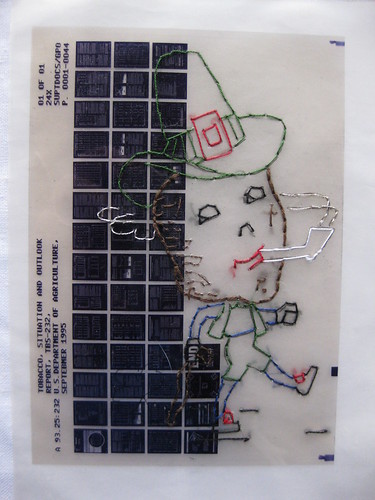
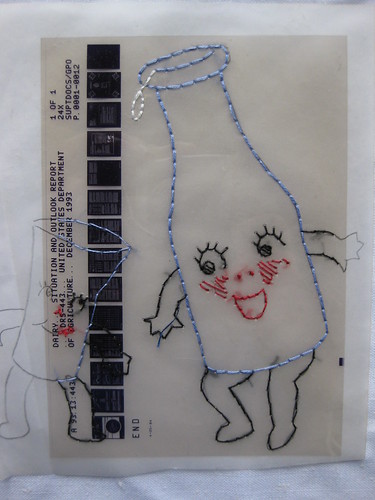
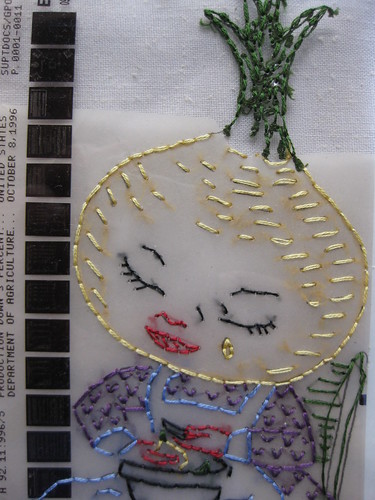
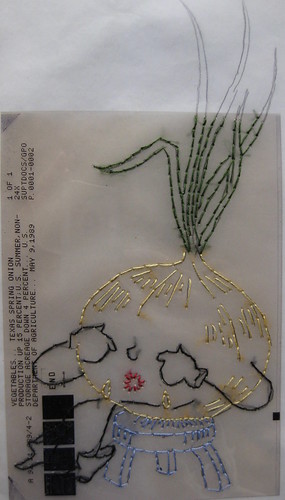
Let's talk specifically about your new embroidery with vintage patterns.  It's so interesting that you stitched them up on microfishe.  Please tell us about the microfishe, what it is and what it's primary use was before you repurposed it and turned it into art. What made you decide to stitch up the patterns on microfishe rather than fabric or something else?
I work in a library, and they withdraw materials once they outlive their usefulness. Microfiche are flat sheets of clear film about the size of a postcard that have micro-reproductions of documents printed on them and are viewed on a special viewer. They were meant to be a space saving method and a way to archive materials. Basically one of them has about 100 pages on a 3x5 piece of film. In looking at the world of ‘stitched things’ I am often attracted to work not done on fabric, but on other materials. The microfiche I got were all agriculture based, with reports on dairy, pickles, sugar, tobacco, so I got the idea to use my extensive collection of vintage embroidery patterns and stitch something vegetal on them, and once I saw the weeping onion patterns I was happy. I also find very cool patterns on flickr. 

I'm stitching on microfiche as it was once one method for permanently archiving printed materials. Each of the 'fiche' I used ties in with the stitched pieces on them. What was once permanent has become ephemeral. Similarly, what was once ephemeral, cute, anthropomorphic iron-on designs for embroidery, has become permanent. So the friction between what was once thought permanent and now thrown away, and what was once short lived is now permanent.


Crying


6.  D
o you have a favorite embroidery stitch?  If so, why?
I adore french knots, but mine have a way of being more lumpy than nest-like. 


7.  Do you have a favorite DMC (or other brand) floss color? If so, what is the color name & number?

I love the new floss from Sublime Stitching and my favorite color is from the “Parlour” set and is called “Fainting Couch.” I love that flair of the dramatic in naming, like Crayola crayon colors. 


8.  And speaking of floss, how do you organize all your skeins of embroidery floss?

This is embarrassing but I have a big box full of large Ziploc bags filled with floss by color. I also have separate boxes for my vintage Strandsheen floss, and an entire separate box of metallic floss. A dream of mine is to have a ‘floss wall’ full of pegs with floss arranged by color and type. 

Weeping

9.  I
n your home, where do you usually sit to stitch? do you like it to be quiet while you stitch, or do you watch tv, listen to the radio, or talk on the phone while you stitch?
I sit by the TV sometimes and watch something I know on Netflix. I have to pay attention when I stitch or my stitches get very wonky. If I’m working by the computer I’ll put on music. Stitching can be meditative, but sometimes it is mind numbing. 


10.  Anything else you would like to share? (blog link, shop link, or anything that you want to say that I didn't ask) 

Thank you so much for your interest in my pieces. It really means a lot to me when someone notices my work.
You can see my more serious work at www.markbieraugel.com I blog about my artistic process here markbieraugel.blogspot.com/ And of course you can see my work on flickr at www.flickr.com/photos/bieraugel/


**AND NOW FOR THAT SPECIAL CONTEST ANNOUNCMENT YOU WERE WAITING FOR!!**


The New Embroidery with Vintage Patterns group on flickr is hosting another contest!  It will begin January 1, 2013 and end February 10, 2013.  Check out this discussion post for the announcement of the eight new prize sponsors!  Over the next couple of weeks, one-by-one, each prize sponsor will be introduced in a separate discussion post in the NEwVP group -- there will be a fun interview to read, some stitchy photos of their work to see, and a picture of what each prize sponsor is donating!        
 
The official contest announcement will be published in the NEwVP group shortly after Christmas so I invite all of you to join so you can keep up with all the forthcoming and exciting contest details!


November 22, 2012

agulha não pica giveaway: and the winners are...

Olá! Today I'm very happy to announce the winners of last week "agulha não pica" giveaway.

The first winner is "Ali M" and the comment was: "I think of all the beautiful things I like the Japoneira needlework kit best, I always over embroider things, never know when to stop, so I love the beauty and simplicity of it." She will win this kit:

Japoneira Embroidery Kit
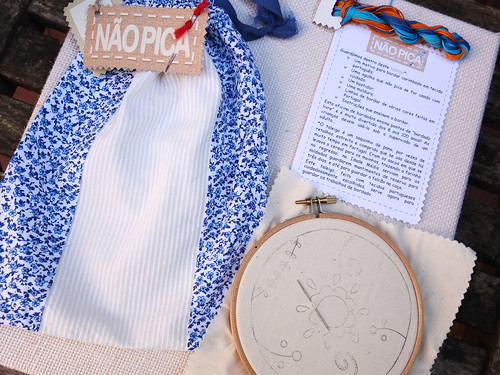
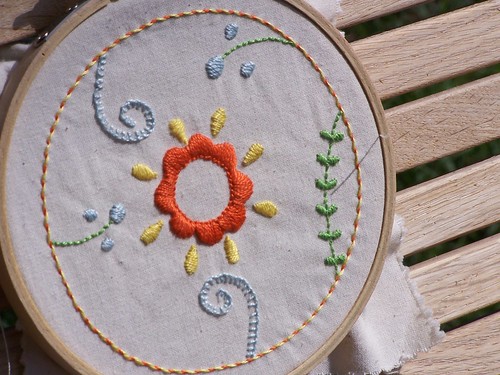
Embroidery kit with pre-stamped Japoneira Portuguese traditional pattern by agulha não pica
Japoneira Embroidery kit
Japoneira embroidery kit - work done!
The second winner is "Jody C" and the comment was "What a fun shop you have! I love "all things embroidery" but my heart reaches to the heart embroidery. The color and the fill stitches grab me. I am just teaching my 4 year old granddaughter to embroider. She sits on my lap, and together we stitch in and out with red floss. I know she'd love a kit of her own to make. The cork beads -- love that natura"
As asked, Jody C will receive this embroidery kit!!

Viana's Heart Embroidery kit
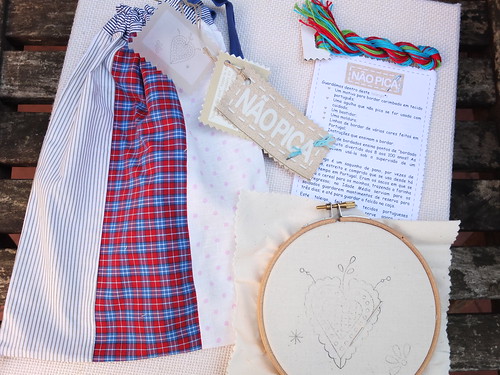
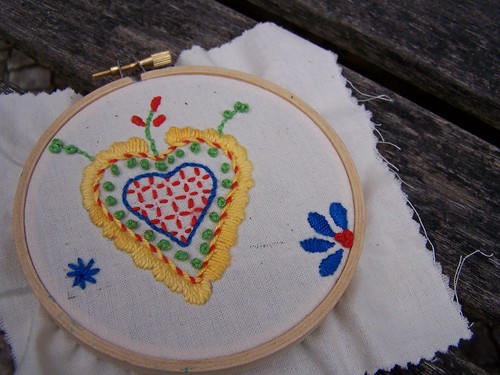
Embroidery kit with Viana's heart pre-stamped pattern by agulha não pica
Viana's Heart emboidery kit
Viana's heart embroidery kit - work done!
I promised that I would choose one of the comments about my shop and the author would win a special gift... This was not a random choice... It was MY CHOICE!! And my first choice was the comment made by Arundhati: I love love love your ETSY shop. It gives wonderful insight into Portuguese art life. At the same time, we can use embroidery into our life in different ways such as necklace and book cases which I had never thought of. Very artistic and one of a kind. Love it

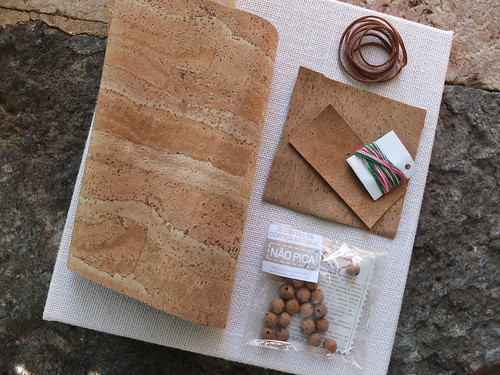
Arundhati will receive the material she will need to make an embroidered book cover made of cork fabric...
Supplies to make a book cover made of cork fabric
All the material needed to embroider a cork fabric book cover and make a book marker with cork beads
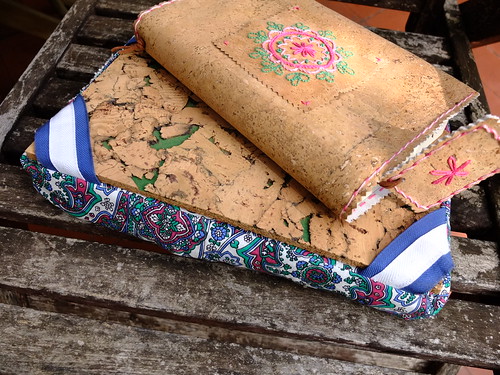
Embroidered cork fabric book cover
Embroidered book cover made of cork fabric - see tutorial here and free pattern here
But It was a hard choice... And the other comment that made my choice so hard was: The thing I love the most about your ETSY shop is the fact that we can choose between your amazing Portuguese products, materials, such as your cork beads and scraps, or your embroidery kits, that allow us to venture in this fantastic world of crafting.

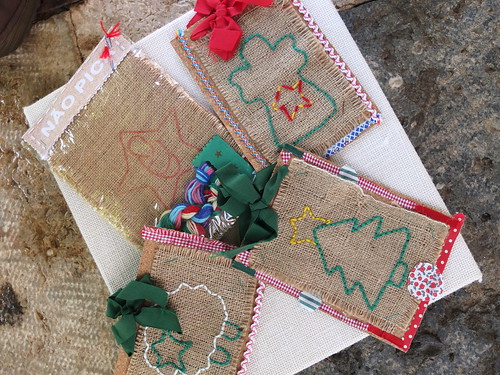
And as so, Teresa Perdigão will win this burlap embroidery kit with Christmas patterns...


DSCF7115
Christmas set with four pre-stamped patterns on burlap
Thank you all for your kind words about my shop and my products...  And I loved to know that some of you were already in Portugal. For those who haven't, next week will continue our trip on Portuguese embroidery traditions... Até para a semana (see you next week)!

(Ali M, Jody C, Arundhati and Teresa Perdigão don't forget to contact me in order to give me your addresses)
SITE DESIGN BY RYLEE BLAKE DESIGNS